Capitol Subbasement
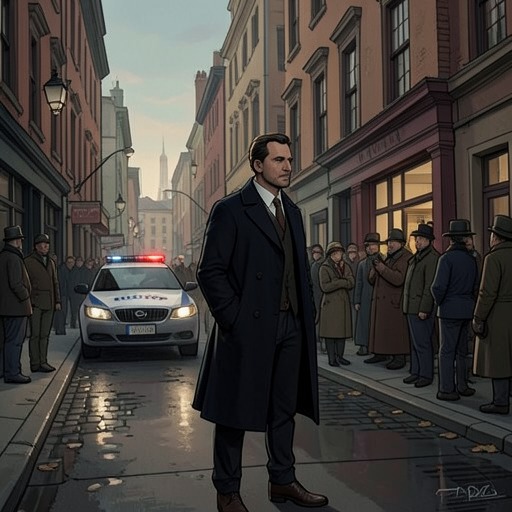
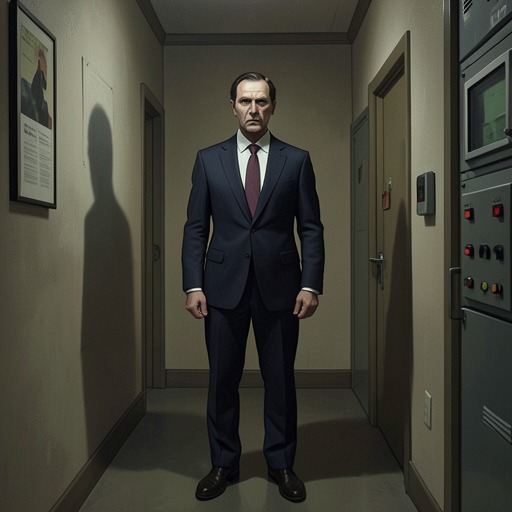
The Lost SymbolThe Capitol Subbasement is a concealed, seldom-used level beneath the United States Capitol whose cramped passages lead toward a private room associated with Peter Solomon. Its importance lies not in its size but in the gap between what the building’s officials know and what its records disclose: long abandoned storage rooms surround an exception marked private and reserved for Solomon. The descent turns an administrative basement into a threshold where an obscure label, a missing key, and a carefully restricted room make hidden history tangible.
Location and Access
The entrance lies at the central point of a long passage running through the Capitol’s eastern foundation, where the Senate Basement gives way to the House Basement. A faded engraving on an old metal door reads SBB. When Langdon asks why the label begins with an S despite the door’s position between the two sides, Trent Anderson explains that the letter stands for sub, not Senate: SBB means the Capitol’s subbasement. The clarification shifts the label from a territorial designation to a vertical one, naming a level below the better-known basement corridors.
Access is conspicuously difficult. The main SBB key cannot be located, and staff search for a spare from an auxiliary box. There is no readily available secondary key for SBB XIII either. The records offer little help at first: computerized logs contain no entries for the rooms, while handwritten logs indicate that the SBB storage rooms were cleaned out and abandoned more than twenty years earlier. The delay and uncertainty make the place feel less like a routinely managed part of the Capitol than a space that has slipped out of ordinary use.
The Private Room in the Records
SBB XIII is the exception to the general abandonment. A handwritten notation, made and initialed by the Architect of the Capitol, designates it as private. In this context, Architect refers not to the Capitol’s original designer but to the official responsible for its maintenance, restoration, security, personnel, and offices. The record therefore gives the room an administrative history as well as a hidden one: it was not merely overlooked, but formally set aside.
The notation specifies that the private space was reserved for Peter Solomon. Staff infer that Solomon possesses the primary SBB key and any keys to SBB XIII, but the passage does not establish that he is present or that the group has yet gained entry to his room. That distinction preserves the room’s mystery. The documents identify its owner and protected status, while the missing keys and incomplete records leave its contents undisclosed. For Langdon, the revelation is startling precisely because Solomon’s private relationship with the Capitol’s basement has not been part of his understanding of his friend.
Descent and Physical Layout
Beyond the metal entrance, a single bulb reveals an alarmingly steep staircase descending into darkness. The wooden steps are shallow, the walls close enough for Langdon’s daybag to scrape against them, and the air below is cold and damp. At the bottom, the floor is dirt. The descent ends not in a broad chamber but in an ultranarrow corridor running across the foot of the stairs, approximately fifty feet long and lined with small wooden doors set closely together. The rooms behind them appear to be no more than about ten feet wide.
The storage area’s arrangement makes its number part of its visual impression. Langdon sees thirteen rooms organized like a small mausoleum: seven vaults facing seven, with one space removed to accommodate the staircase. As they pass the open door of SBB IV, its copper plate is legible beneath a coating of verdigris; inside, a narrow stone chamber contains collapsed wooden boxes and crumpled packing paper. The room looks abandoned, in keeping with the records, and provides a concrete example of the otherwise repetitive units lining the passage. The layout, like the doors, is functional and compressed, but its exact count encourages Langdon to notice a pattern.
Narrative Significance
The subbasement gives architectural form to the novel’s distinction between a public institution and the secrets kept within it. Above, the Capitol is a national building; below, it contains a neglected level whose ordinary storage spaces conceal a room set apart for Solomon. The contrast is sharpened by the evidence’s material details: a barely visible inscription, an unavailable key, old logs, and a handwritten reservation. Secrecy here is not an abstract rumor but a matter of access, records, and custody.
The thirteen-room arrangement also invites symbolic interpretation without proving that the building was designed to encode one. Langdon recalls the many appearances of thirteen in the Great Seal of the United States and imagines how conspiracy theorists might respond to thirteen rooms beneath the Capitol. His observation marks the difference between noticing a pattern and establishing its meaning. The subbasement thus operates both as a real, constricted place that the characters must enter and as an interpretive puzzle: its physical organization supplies suggestive signs, while its private room remains the decisive secret. The descent brings the characters closer to Solomon’s hidden history, but the surviving evidence at this stage reveals the room’s designation and owner, not what lies inside.